
The Theme of Scientific Discovery
Project Hail MaryThe novel highlights the process of scientific discovery, from observation to hypothesis to experiment.
increasing Bearing strength in each event
 decreasing
Bearing strength in each eventdecreasingDiscovering Astrophage
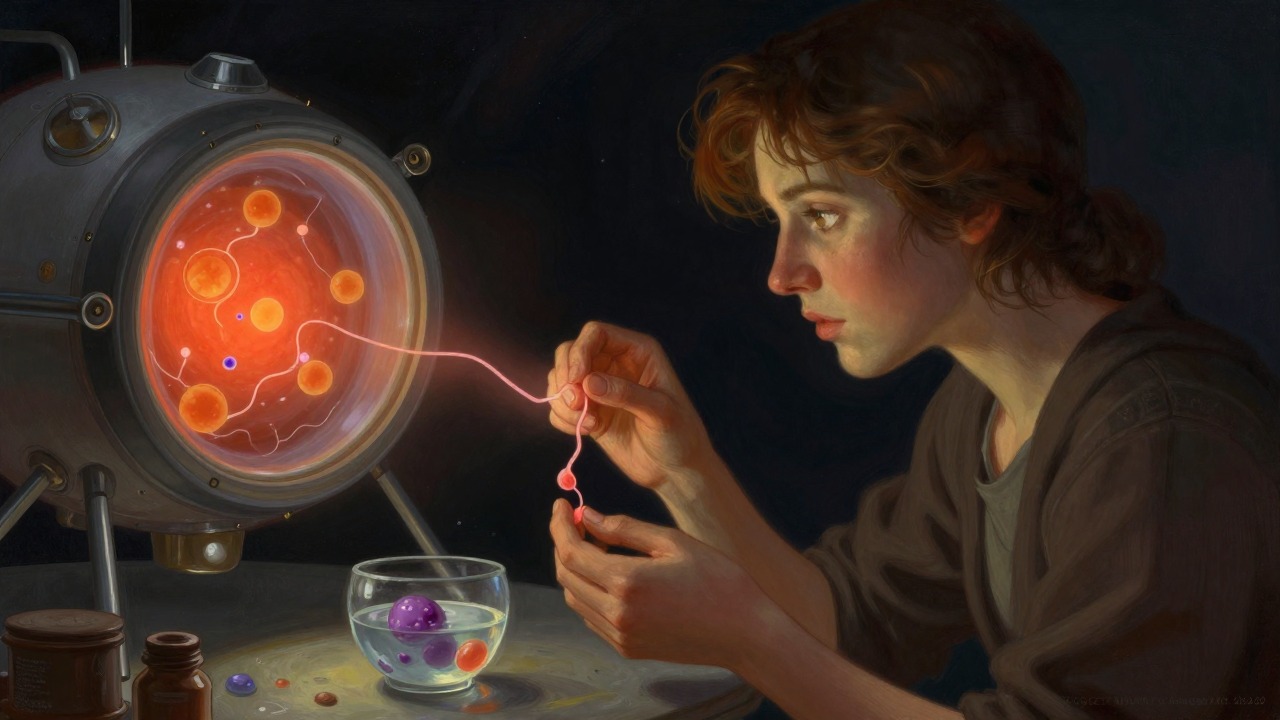
The Microbe from Space
The First Observations
Grace examines the samples from the ArcLight probe. He notes that the 'dots' are opaque, wriggle, and emit infrared light. He hypothesizes they are alive. He experiments with heat, light, and radiation, discovering their unique properties.
The Breakthrough with Poking
Grace pokes an Astrophage with a nanosyringe, killing it. The dead cell reveals its internal structure: it is mostly water, which contradicts Grace's life's work. He is humbled but presses on.
The Bigger Picture
Through further experiments, Grace deduces the Astrophage life cycle: they feed on the Sun, travel to Venus to breed, and return. This understanding is crucial for finding a solution.
Discovering Taumoeba

The Predator Found
The Adrian Sample
Grace and Rocky collect a sample from the upper atmosphere of Adrian, the planet in the Tau Ceti system. Under the microscope, Grace sees a diverse ecosystem. He observes a Taumoeba eating Astrophage. The predator is found.
The Isolation
Grace isolates the Taumoeba and begins experiments. He learns that it needs carbon dioxide and cannot tolerate nitrogen. This leads to the breeding program.
The Application
The discovery of Taumoeba is the key to saving both worlds. It is a prime example of scientific serendipity and the importance of observation.
Breeding Taumoeba-80
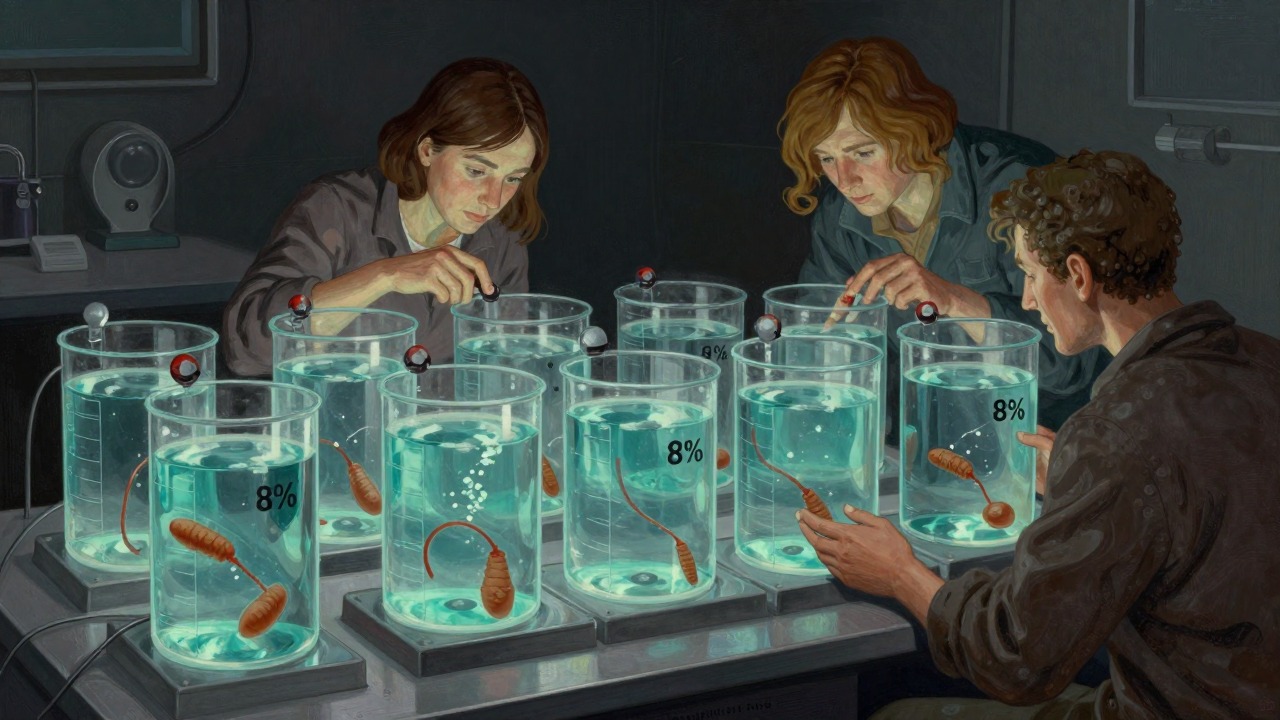
Directed Evolution
The Nitrogen Challenge
Grace and Rocky set up ten breeder tanks with increasing nitrogen levels. They select the survivors and repeat. The process is meticulous and requires patience.
The Success
After many generations, they achieve Taumoeba-80, which can tolerate 8% nitrogen. The breakthrough is a triumph of applied evolution.
The Unintended Consequence
Grace later discovers that the Taumoeba can also permeate xenonite, a side effect of the breeding process. This leads to the contamination crisis. The novel shows that scientific progress often comes with unforeseen complications.
Grace's early experiments
At Adrian
Over several weeks
